Cases
My colleagues and I write case studies for MIT Sloan. They are free to download and use. Here are the links.
ESPN Navigates a New World Order with Sean R.H. Bratches
ESPN Navigates a New World Order | Case Study | MIT Sloan
In the early 2010s, ESPN was at the height of its powers. As the crown jewel of the then unassailable cable television bundle, ESPN was receiving upwards of $7 every month from more than 100 million subscribers whether they watched ESPN or not. This was in addition to the multitude of ESPN offspring, including ESPN2, ESPNEWS, ESPN Classic, and The SEC Network, from which the company received additional fees. ESPN’s secondary revenue stream – advertising – was also booming, as sponsors paid a premium to associate themselves with the brand and live sports content across ESPN’s myriad media platforms. ESPN was known as The Walt Disney Company’s cash cow, a reputation well-earned for reliably driving the performance of Disney’s Media and Entertainment division and the company overall. (Hearst owns 20% of ESPN.) By 2024, the question of ESPN’s marketplace position had become legitimate and increasingly pressing for Disney/ESPN management and the sports ecosystem. In the Internet-enabled streaming era, ESPN had encountered major headwinds: declining revenue, rising costs, changing consumer behavior, and increasing competition from new marketplace entities. Most devastatingly, cable/satellite subscribers to ESPN were decreasing precipitously, from 100 million at the zenith of the model (circa 2012-13) to an estimated 70m in 2023. This downward trend showed no signs of slowing, with millions of homes churning out of cable/satellite annually. To compete in a rapidly changing marketplace, Disney and ESPN took steps to establish and strengthen their position. In 2018, Disney launched ESPN+, its direct-to-consumer streaming platform that would serve as an add-on/supplementary service (most of ESPN’s premium content was not available on the platform). Moreover, in a decision that had been widely speculated about for years, Disney CEO Robert Iger finally confirmed in 2023 that the “flagship” ESPN network, with all its premium content, would be available direct to consumers for the first time ever in 2025. Then, Disney, Warner Bros. Discovery, and Fox announced in February 2024 a joint venture that would bundle each of the companies’ linear sports networks and networks that show sports into one sports streaming service, Venu Sports. Disney was trying to strike a delicate balance with ESPN: extract as much value out of its declining linear television business in the short-term, while investing in direct-to-consumer streaming to remain a relevant sports brand and grow over the long-term, potentially in ways that could hasten the further decline of their linear television business. But with this transformation came new, difficult, and perhaps existential challenges. Could ESPN transition from a company built on a B2B business model with affiliates and advertisers to more of a B2C consumer product? Could it find opportunities for revenue growth and operate profitability, which had been a challenge across the board in streaming, while also competing for live premium rights? Could it achieve relevance with a younger generation of fans who had demonstrated a resistance to video subscription services? Was this a tipping point where the “cable operators” – a.k.a. broadband providers – get out of the video business and jeopardize ESPN’s primary revenue stream? For the self-professed Worldwide Leader in Sports, the answers to these and other questions would determine its fate.
 Ben Shields
Formula 1: Unleashing the Greatest Racing Spectacle on the Planet with Cate Reavis
Formula 1: Unleashing the Greatest Spectacle on the Planet | Case Study | MIT Sloan
In 2017, U.S.- based Liberty Media, owner of the Atlanta Braves baseball team and streaming music provider SiriusXM among other properties, purchased Formula 1, the commercial organization behind the motorsport of F1 from a private equity firm. The well-seasoned management team that took over, inherited a sport that, while profitable, had only a small business organization supporting it. In addition to building out a business infrastructure, the team’s goal was to evolve F1 from a motorsport into a global entertainment brand, akin to the National Basketball Association (NBA). In short, they wanted to create the greatest spectacle on the planet. The question was how to do this? On the sporting side, races had become predictable and lacked consistent wheel-to-wheel action. On the commercial side, the sport needed a younger, more diverse fan base which would inevitably engage with the sport differently than generations past. In addition to its sporting and commercial obligations, F1 played a critically important role as a technology leader for the automotive industry. Would Formula 1’s new management be able to find the right balance between these three important albeit, at times conflicting, roles.
Ben Shields
The National Women's Soccer League: Navigating Uncertainty, Building for the Future with Cate Reavis and Shira Springer
The National Women’s Soccer League (A): Navigating Uncertainty, Building for the Future | Case Study | MIT Sloan
Lisa Baird became the commissioner of the National Women’s Soccer League (NWSL) on Tuesday, March 10, 2020. Then, COVID-19 upended the sports world. On Thursday, March 12, as sports leagues around the country canceled or postponed their seasons, she announced the NWSL was cancelling pre-season matches and developing contingency plans for the regular season. Baird and other league leaders knew that the NWSL stood in a precarious position. For financial, competitive and cultural reasons, it needed to get back on the field in 2020. This case study and companion podcast describe how Baird successfully created opportunities for the 8-year old league during her first year as commissioner, despite the financial and medical chaos that accompanied the pandemic. Notably, the NWSL was the first sports league to return to play and complete a modified season, an accomplishment that was under-appreciated by the mainstream sports media. The league also gained big-name sponsors and set television viewership records. As she began her second year, Baird was focused on making the right strategic decisions in order to bring financial sustainability and greater cultural relevance to the best professional women’s soccer league in the world.
Cate Reavis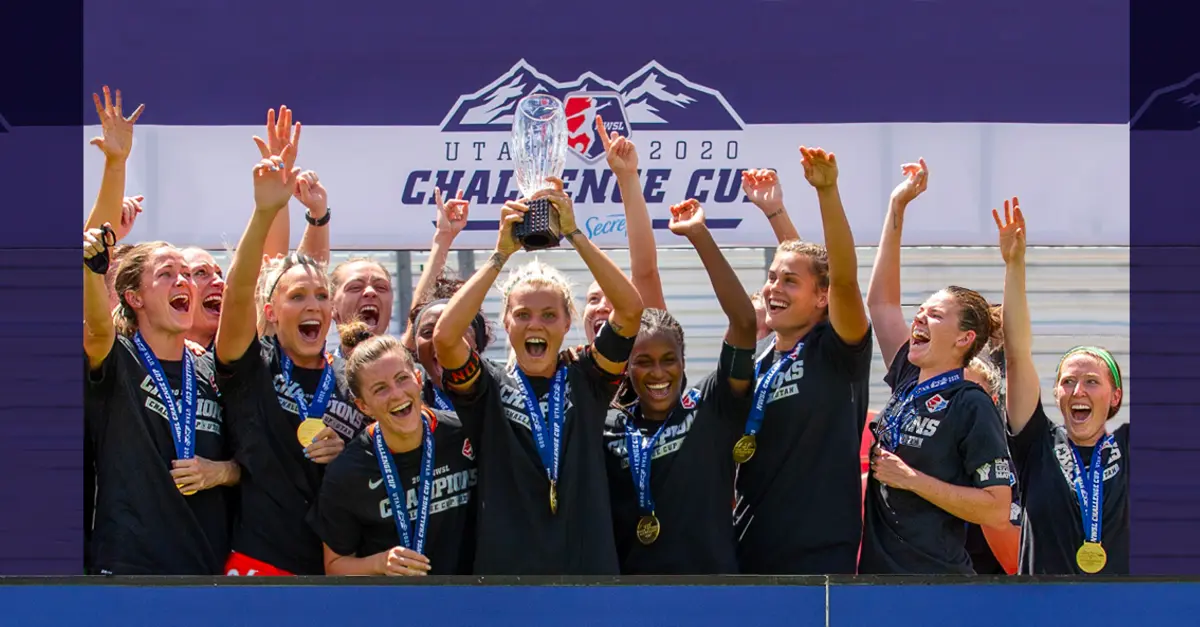
Athletes Unlimited: Innovating Professional Sports and Empowering Players with Cate Reavis and Shira Springer
Athletes Unlimited: Innovating Professional Sports and Empowering Players | Case Study | MIT Sloan
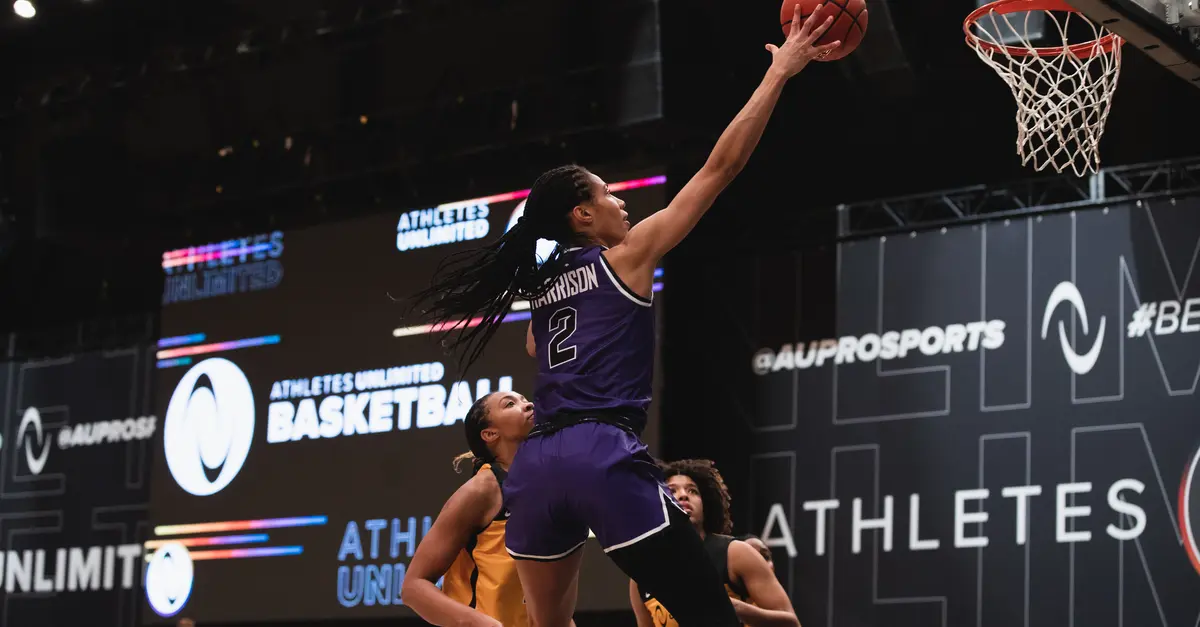
On October 7, 2019, businessmen Jonathan Soros and Jon Patricof pitched a concept for a new professional sports startup to four professional softball players who had traveled to Soros’s office in New York City. During the meeting, the two men laid out their vision for an innovative professional softball league that would involve a new competition format, a new scoring system, and a new player-led organizational structure. There would be no team owners and no traveling from stadium to stadium. All games would take place in the same location. Players would make critical team and league decisions and get an equity-like interest in the league. Soon after Soros and Patricof concluded their pitch, the softball players enthusiastically said they were all in. And the concept didn’t stop at softball. Over the next three years, Athletes Unlimited launched women’s professional leagues in four different sports—softball, volleyball, lacrosse, and basketball—with more than 200 athletes on team rosters. In March 2023, Fast Company named AU one of the world’s 10 most innovative companies in sports, making it the first women’s sports league to receive that accolade. After a whirlwind three years, AU was at a reflection point. What should be next for the fledgling startup? What would help AU break through on a bigger scale, gain more exposure, win over more fans, generate more revenue, and attract more investors and partners? How could AU build on its momentum without diluting its player-driven mission and its commitment to innovation and social impact on and off the field or court?
Cate Reavis